

 Home
Home- Bamboo
- Granite
- Lighting
- Interiors
- Traditional Shoji Paper And Acrylics For Repair Or Manufacture
- Bespoke Shoji Screen Manufacturing Service
- Japangarden Interior Design Service
- Oriental Style Traditional Futons
- Tatami Flooring
- Interior BoxLights And Bamboo Lights
- Oriental Screens
- Traditional Hot Tubs And Japanese Style Oforu
- Oriental Style Furniture And Furnishings
- Calligraphy Brushes And Inks
- Exteriors
- Specimen Rocks
- Water
- Wind
- End of Line
- Japangarden Design
Visiting a Noh Performance: 20 Tips for First-Time Audiences
Visiting a Noh Performance: 20 Tips for First-Time Audiences
Attending a Noh performance is not like going to the theatre as you may know it. It is slower, more symbolic, and deeply rooted in Japanese aesthetics. With a little preparation, it becomes an extraordinary and memorable experience.
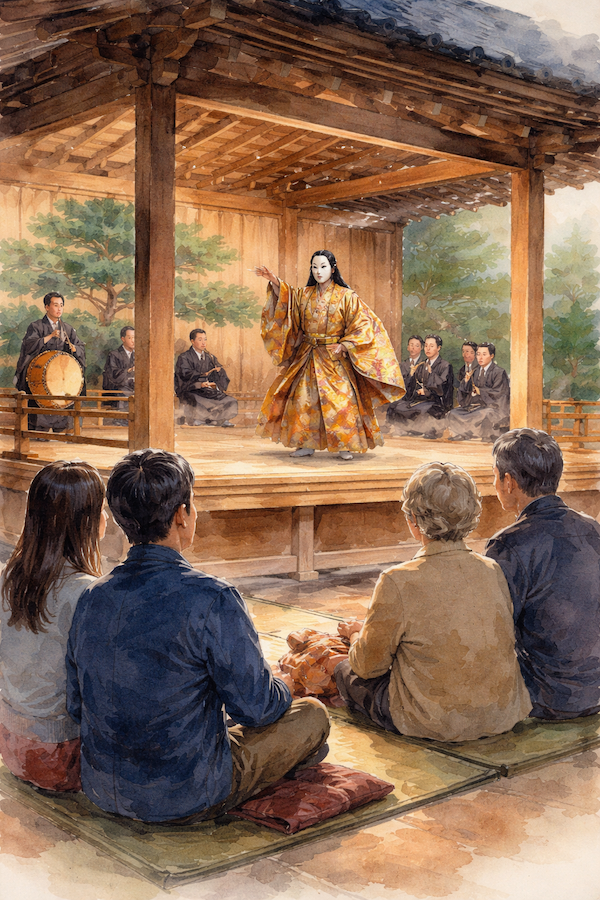
1. Understand what Noh is (and isn’t)
Noh is one of Japan’s oldest performing arts, developed over 600 years ago. It combines drama, chant, music, and dance into a highly refined form. The action is minimal, but the emotional and spiritual depth is immense. This is not spectacle—it is meditation in motion.
2. Let go of modern storytelling expectations
Noh does not aim for realism or fast-paced narrative. Stories unfold slowly, often circling memory, longing, loss, or the supernatural. Meaning is suggested rather than explained. Patience is essential—and richly rewarded.
3. Read a short synopsis beforehand
Knowing the basic story transforms the experience. Many theatres provide English summaries, either printed or online. Five minutes of preparation can turn confusion into clarity.
4. Expect stillness and silence
Audiences sit quietly throughout the performance. There is no eating, whispering, or phone use. The shared silence is part of the atmosphere and heightens concentration.
5. Arrive early and settle in
Noh begins exactly on time. Arriving early allows you to absorb the space, study the stage, and transition into a slower mental rhythm.
6. The stage itself is symbolic
The roofed wooden stage, polished floor, and painted pine tree backdrop are all meaningful. The pine represents permanence and the spiritual world—unchanged for centuries.
7. Masks are not disguises
Noh masks are subtle instruments of expression. Tiny shifts in head angle create entirely different emotions. Watch closely—the performance lives in nuance.
8. Movement is deliberate and restrained
Every step, turn, and gesture is codified. What seems slow or simple is the result of lifelong training. Stillness is as expressive as motion.
9. Chant replaces everyday speech
Dialogue is sung or chanted rather than spoken. You are listening for rhythm, tone, and emotion—not conversational language.
10. Music sets the emotional landscape
The flute and drums are sharp, raw, and sometimes startling. They punctuate time rather than accompany action. This is intentional—lean into it.
11. Costumes carry meaning
Rich silk robes signal character type, social status, and emotional state. Even colour choices are symbolic.
12. You do not need to understand every detail
It is normal to miss references or layers of meaning. Allow the performance to wash over you. Understanding deepens over time.
13. Dress neatly, not formally
There is no strict dress code, but smart-casual clothing shows respect. Think calm, understated, and comfortable.
14. Applause is restrained
Applause usually happens at the very end, not between acts. Follow the lead of the audience.
15. Choose your venue thoughtfully
Some theatres specialise in Noh and offer English guides or introductions. Venues in Kyoto and Tokyo often cater well to first-time visitors.
16. Sit where you can see the actor’s face
If possible, choose seats with a clear view of the main actor (shite). Facial orientation matters more than distance.
17. Accept moments of confusion
Feeling lost is part of the experience. Noh reflects life, memory, and impermanence—clarity is not always immediate.
18. Stay present rather than analytical
Avoid constantly “working it out.” Let emotion, rhythm, and atmosphere guide you.
19. Reflect afterwards
Noh often lingers in the mind. Take time after the performance—perhaps over tea—to reflect on what you felt rather than what you understood.
20. See it more than once
Noh reveals itself slowly. A second performance feels entirely different from the first. Familiarity deepens appreciation.
A Noh performance is not something you simply watch—it is something you enter. Approach it with patience, humility, and openness, and it offers a rare window into Japan’s spiritual and artistic heart.
INFORMATION
CUSTOMER SERVICE
- Terms & Conditions
- Privacy statement
- Cookie Policy
- Payment Terms
- Delivery
- Mend a Paper or Shoji Screen
- Zen Gardens and Why We Rake
- Japanese Stones and their Use
- Visiting Japan for the First Time
- 20 Tips for Visiting a Sumo Wrestling Event for the First Time
- Visiting a Noh Performance: 20 Tips for First-Time Audiences
- 20 Japanese Meals: From Workers’ Food to High-End Cuisine
- Arrival in Japan: From Narita Airport to Tokyo
- A First Visit to a Japanese Ryokan
- Mount Fuji and the Snow Monkeys of Nagano
- Understanding the Tea Ceremony
- Warlon Acrylic and Products
MY ACCOUNT
CONTACT US
-
ADDRESS:
JapanGarden.co.uk
25 Pound Meadow, Ledbury
HR8 2EU, Herefordshire
United Kingdom (Great Britain) -
TELEPHONE:
+44 (0)1531 630091 -
EMAIL
Contact Us

Copyright © 2004-2026 JapanGarden.co.uk