

 Home
Home- Bamboo
- Granite
- Lighting
- Interiors
- Traditional Shoji Paper And Acrylics For Repair Or Manufacture
- Komika Range Of Handmade Tables And Benches
- Bespoke Shoji Screen Manufacturing Service
- Japangarden Interior Design Service
- Oriental Style Traditional Futons
- Tatami Flooring
- Interior BoxLights And Bamboo Lights
- Oriental Screens
- Traditional Hot Tubs And Japanese Style Oforu
- Oriental Style Furniture And Furnishings
- Calligraphy Brushes And Inks
- Exteriors
- Specimen Rocks
- Water
- Wind
- The Japangarden Guide
- Japangarden Design
Ideas for Japanese Style Restaurant Interiors
Modern Japanese Restaurant Interiors
Six Contemporary Design Approaches Inspired by Japan
A successful Japanese restaurant is about far more than exceptional cuisine. The finest establishments create an atmosphere where architecture, craftsmanship, lighting and carefully selected natural materials become part of the dining experience.
At Japangarden, we have long admired the understated elegance of Japanese interiors. Their beauty lies not in elaborate decoration, but in restraint; every material has purpose, every object has space to breathe, and every detail contributes to a feeling of calm.
Whether you are planning a sushi bar, ramen restaurant, robata grill or fine dining venue, these six contemporary design approaches provide inspiration for creating an authentic Japanese environment that feels timeless rather than themed.
1. Contemporary Zen Minimalism
A spacious oak-lined sushi restaurant with vertical timber slats, floating shelves and soft indirect lighting.
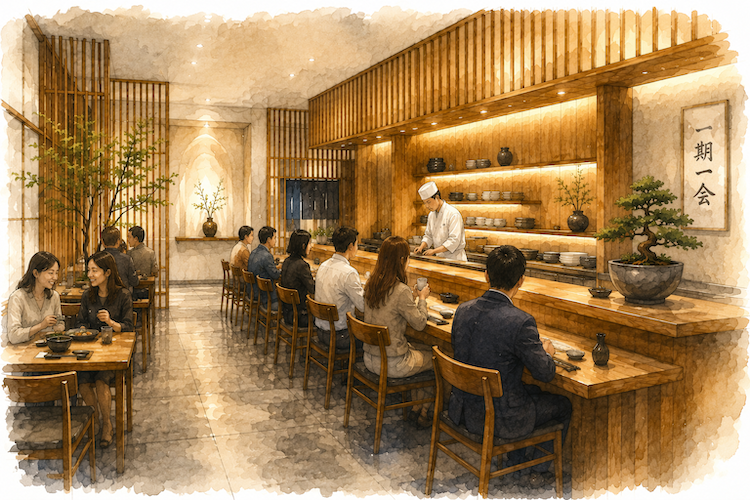
Clean lines, beautifully crafted timber and carefully controlled lighting create interiors that allow the food—and the craftsmanship behind it—to become the focal point.
Rather than overwhelming guests with decoration, Contemporary Zen Minimalism celebrates simplicity. Warm oak, natural stone and textured plaster walls provide depth without distraction, while concealed lighting creates a calm and welcoming atmosphere.
Design Features
- Vertical oak or cedar wall slats
- Large-format porcelain or natural stone flooring
- Floating timber shelving
- Hidden LED lighting
- Handmade ceramic tableware
- Black steel detailing
- Open sushi or robata counter
Colour Palette
- Warm Oak
- Soft White
- Natural Linen
- Charcoal
- Grey Stone
Perfect for: Fine dining restaurants, sushi bars and contemporary Japanese cafés.
2. Kyoto Machiya Inspired
Warm cedar beams, illuminated shoji screens and views into a tranquil courtyard garden.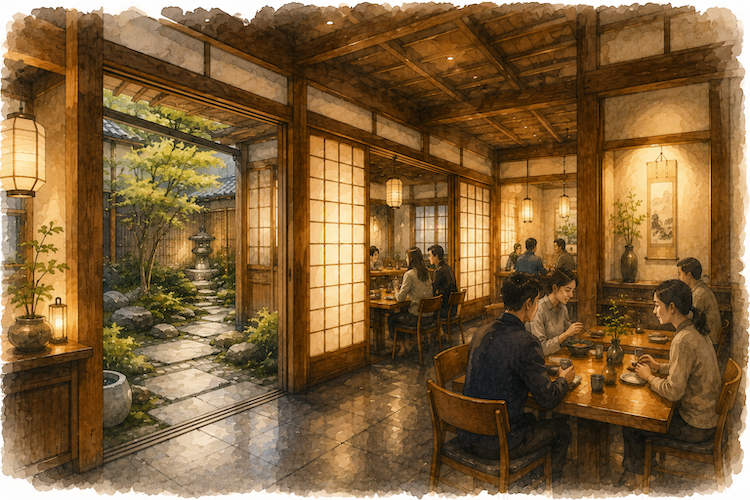
Traditional Kyoto townhouses—or Machiya—combine warmth, intimacy and craftsmanship. Modern interpretations retain their timber structure and natural materials while introducing improved lighting, glazing and contemporary comfort.
Sliding shoji-inspired partitions gently divide dining spaces without making them feel enclosed, while earthy plaster walls and cedar beams create a welcoming atmosphere.
Design Features
- Cedar beams
- Shoji-inspired acrylic washi screens
- Dark stained timber
- Clay or lime plaster walls
- Stone entrance feature
- Courtyard planting
- Warm pendant lighting
Colour Palette
- Cedar Brown
- Walnut
- Sandstone
- Soft Cream
- Moss Green
Perfect for: Restaurants wishing to create private dining areas and intimate spaces.
3. Japanese Garden Interior
Restaurant overlooking a courtyard with Japanese maple, granite boulders, moss and a reflective water feature.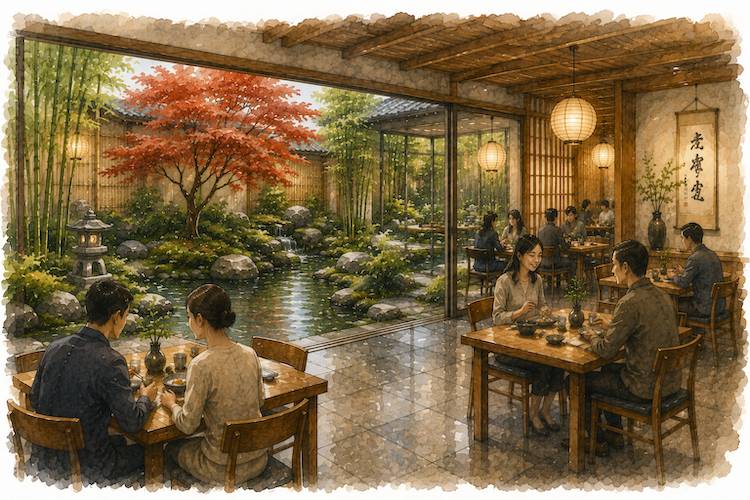
One of the most memorable ways to create a Japanese dining experience is to bring the garden indoors.
A carefully composed courtyard transforms the restaurant into an immersive environment where every table enjoys a changing seasonal view. Rather than elaborate landscaping, the focus should be on simplicity, balance and natural texture.
Design Features
- Feature Japanese maple
- Granite boulders
- Moss planting
- Bamboo groves
- Dry gravel gardens
- Tsukubai water basin
- Large glazed openings
Colour Palette
- Granite Grey
- Moss Green
- Autumn Red
- Bamboo Green
- Weathered Stone
Perfect for: Destination restaurants and premium dining venues.
4. Industrial Tokyo
Contemporary ramen restaurant combining exposed concrete, black steel and warm walnut timber.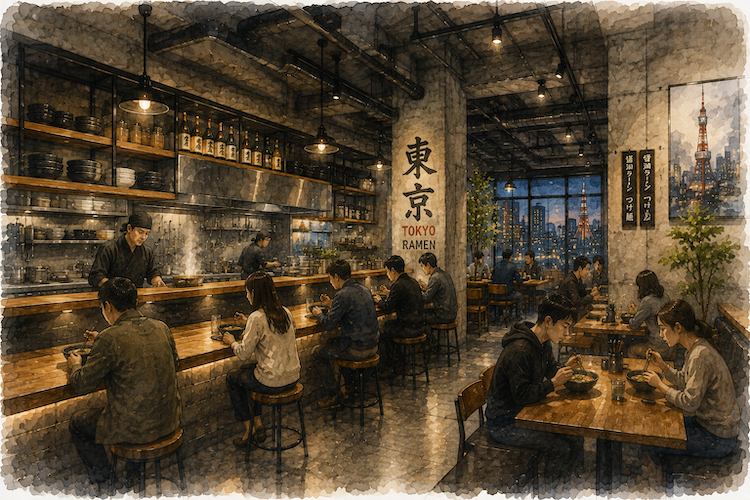
Modern Tokyo demonstrates that Japanese design can also feel energetic and urban.
Industrial materials such as exposed concrete and blackened steel are softened with timber, warm lighting and handcrafted furniture, creating an atmosphere that feels contemporary without losing Japanese restraint.
Design Features
- Exposed concrete
- Blackened steel
- Walnut joinery
- Leather seating
- Smoked glass
- Open ceilings
- Warm pendant lighting
Colour Palette
- Concrete Grey
- Black Steel
- Walnut
- Bronze
- Charcoal
Perfect for: Izakaya restaurants, ramen bars and contemporary city venues.
5. Washi & Light
Dining room illuminated by glowing washi screens and oversized paper lanterns.
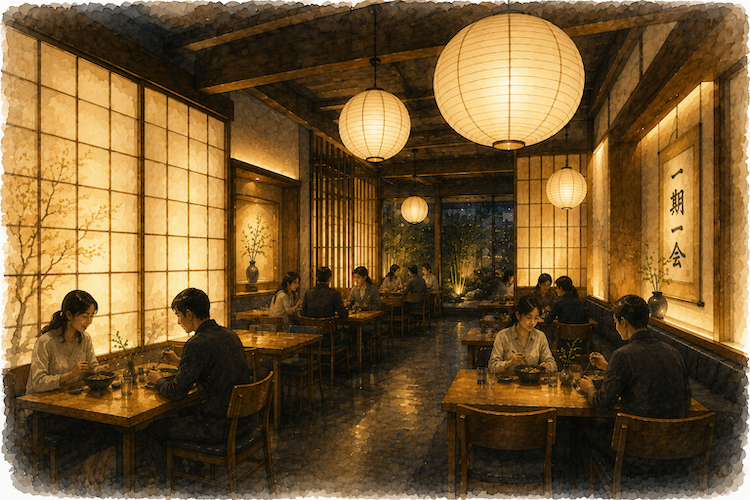
Lighting becomes the architecture.
Traditional washi paper has inspired some of Japan's most beautiful interiors. Today, durable acrylic washi panels provide the same gentle diffusion while offering exceptional strength and easy maintenance for commercial interiors.
Soft, layered illumination creates warmth, intimacy and a flattering atmosphere for both guests and food.
Design Features
- Illuminated acrylic washi walls
- Oversized paper pendant lights
- Backlit shoji screens
- Floating illuminated ceilings
- Hidden LED lighting
- Layered lighting design
Colour Palette
- Warm White
- Ivory
- Natural Birch
- Pale Oak
- Soft Linen
Perfect for: Restaurants seeking an elegant evening atmosphere.
6. Japanese Timber Craft
Restaurant featuring handcrafted kumiko screens, bespoke oak joinery and live-edge timber counters.
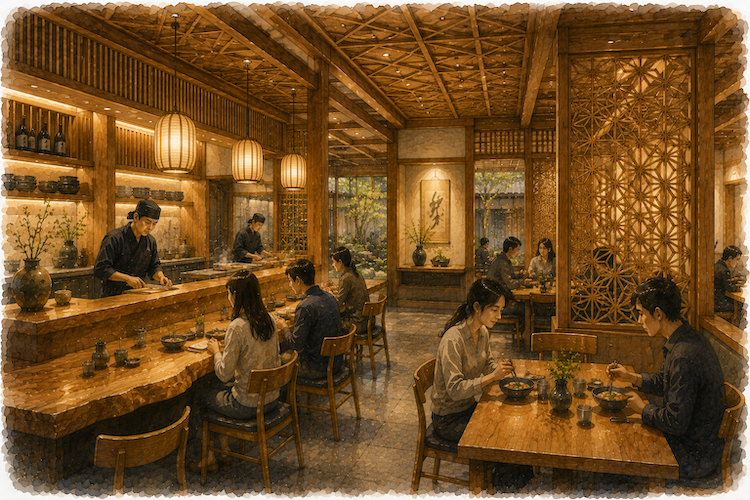
Japanese architecture celebrates craftsmanship.
Beautiful timber joinery, intricate kumiko latticework and carefully proportioned furniture become works of art in their own right. Every detail is precisely made yet never appears ostentatious.
Design Features
- Kumiko feature screens
- Bespoke oak joinery
- Timber lattice ceilings
- Live-edge counters
- Floating shelving
- Handmade furniture
- Tokonoma display alcoves
Colour Palette
- Natural Oak
- Walnut
- Honey Cedar
- Soft White
- Bronze
Perfect for: High-end restaurants where craftsmanship forms part of the dining experience.
Signature Features Worth Investing In
The most memorable restaurants often rely on one or two exceptional architectural elements rather than excessive decoration.
Consider incorporating:
- A dramatic timber sushi counter crafted from a single slab.
- Illuminated acrylic washi feature walls.
- A tokonoma display alcove with seasonal flowers or ceramics.
- Sculptural timber ceilings using acoustic slatted panels.
- An indoor courtyard garden featuring moss, stone and a specimen maple.
- A backlit sake display cabinet with handcrafted shelving.
These elements provide lasting character while reinforcing an authentic Japanese aesthetic.
Materials That Age Beautifully
Japanese interiors improve with age. Natural materials develop depth, texture and patina, adding character over many years of use.
Recommended materials include:
- European Oak
- Japanese Cedar (Sugi)
- Charred Timber (Shou Sugi Ban)
- Black Granite
- Basalt
- Honed Concrete
- Clay Plaster
- Linen
- Bronze
- Handmade Ceramics
Colour Palette
A restrained palette provides a timeless backdrop.
- Warm White
- Sand
- Taupe
- Natural Oak
- Walnut
- Charcoal
- Black
- Moss Green (used sparingly)
- Oxide Red (accent colour only)
What to Avoid
Authentic Japanese interiors rarely rely on obvious decoration.
Avoid:
- Artificial cherry blossom trees
- Bright red-and-black colour schemes
- Excessive lanterns
- Samurai armour or decorative swords
- Busy bamboo prints
- Overly themed décor
Instead, focus on proportion, natural materials, craftsmanship and carefully considered lighting.
Bringing Japanese Design to Your Restaurant
At Japangarden, we believe the finest Japanese-inspired interiors combine traditional craftsmanship with modern materials and contemporary construction techniques.
Whether specifying bespoke oak shoji screens, illuminated acrylic washi panels, handcrafted joinery or Japanese garden features, thoughtful design creates restaurants that guests remember long after the meal has finished.
Our aim is always to capture the quiet spirit of Japanese design—calm, timeless and beautifully crafted.
INFORMATION
CUSTOMER SERVICE
- Terms & Conditions
- Privacy statement
- Cookie Policy
- Payment Terms
- Delivery
- Mend a Paper or Shoji Screen
- Gravel calculator
- Zen Gardens and Why We Rake
- Japanese Stones and their Use
- Warlon Acrylic and Products
- Japanese Acrylic or Shoji Paper??
- Japangarden JPY to GBP Converter
- A Listening Journey Through Japanese Music
- Japangarden Weekly Focus
- Creating a Japanese Garden in a small space
MY ACCOUNT
CONTACT US
-
ADDRESS:
JapanGarden.co.uk
25 Pound Meadow, Ledbury
HR8 2EU, Herefordshire
United Kingdom (Great Britain) -
TELEPHONE:
+44 (0)1531 630091 -
EMAIL
Contact Us

Copyright © 2004-2026 JapanGarden.co.uk